Day Two. Football has found its fans. Now it has to decide who owns the game.
Day one gave us three ideas. Day two put them in front of twenty more panels. What got repeated is now priced in. What got contested is where the money is still undecided.
5 min read
On day one we wrote that capital prices structure, that the stadium has replaced the TV deal as the growth story, and that live is AI-proof while distribution is not. Day two is the test. When people on two stages repeat a thesis without coordinating, the consensus has formed and the advantage is gone. When they contradict each other, the industry has not decided yet. That is where to look.
Confirmed: the fan you can name
Nobody on the digital panel disputed it. Juventus has almost 200 million followers. "Having 200 million followers doesn't mean knowing 200 million people." Three quarters of fans remain anonymous, and the ones you cannot name you cannot sell anything to. Eintracht Frankfurt spent eight years building its own ticketing, content and commerce platform, and now sells it to other clubs. Its reasoning was simple. A sponsor today chooses between advertising with Eintracht Frankfurt or advertising on Meta, and if the club cannot say who its fans are, "the money will go somewhere else."
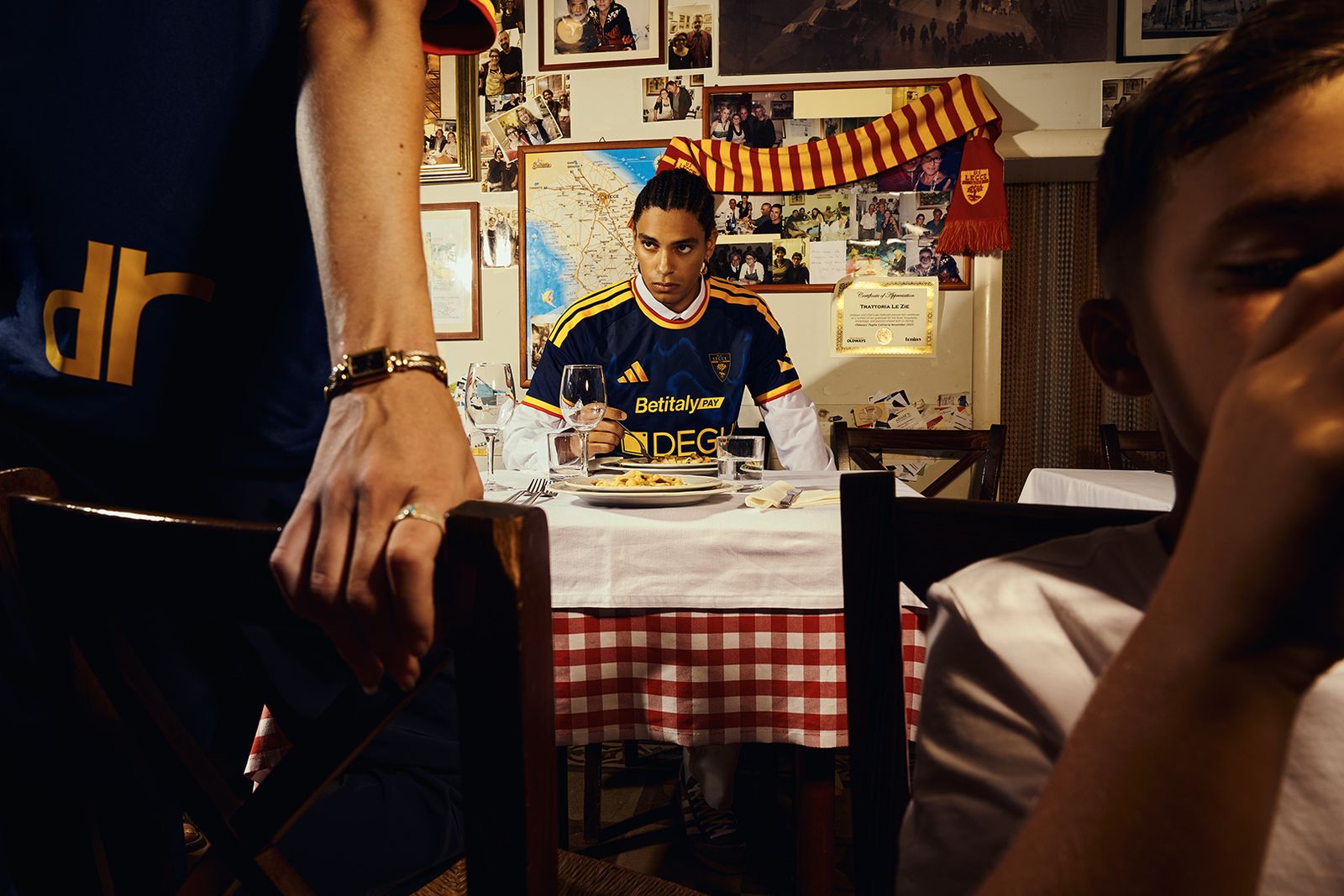
The proof came from the shirts. Genoa released a kit inspired by its link with Boca Juniors and sold out in five hours. Celta's centenary shirt, born from an Instagram message to a small design studio, sold 1,809 units in four hours. The second run of 2,000 went in twenty minutes. Nobody in the room could name a club with the word "creative" in a job title. The clubs that behave like brands are selling out. The rest are printing the supplier's template.
Even the stadium argument came back as a story about people. Atlético de Madrid closed the summit with more than €500 million in revenue without selling a single player, on a stadium that hosts concerts and corporate events all year and a 115-hectare district opening in December. Twelve minutes away, the president of Leganés said the experience at the Bernabéu and the Metropolitano is now "a little bit artificial, it's all Instagram and tourists," and is selling his club as a boutique for international fans who want the real thing. Both are right. Both know exactly who is coming through the gate.
This is settled. The advantage now is speed, not insight.
Surprise one: the match is no longer the only thing people pay to watch
Day one said TV rights had peaked. Day two showed what is growing next to them. Julio Maldonado, the analyst Spain knows as Maldini, publishes four videos a day and says many of them draw more viewers than the match itself. Kids in the stadium recognize him from YouTube, not from television. His rule for the team: upload within fifteen minutes of the final whistle, with or without pictures, because "what they want is the opinion." Highlights are a commodity. The take is the product.
The numbers behind him came from the agency that ran YouTube for eight federations during the World Cup. Short videos brought 53% of the views and 4% of the revenue. Long videos brought the other 96%. FIFA's own channel added 7.5 million subscribers in two months. Alexia Putellas bought the rights to the Women's Super League for Spain and shows the games on her own channel. Mexico opened its national team rights to pay TV for the first time, with Amazon bidding.
The rights business is not shrinking. It is being cut into smaller pieces and sold to people who did not exist as buyers five years ago: a player, a creator, a platform. The winners will be the ones who can sell to a hundred buyers instead of one.
Surprise two: capital hit a wall, and the wall is governance
Day one's thesis was that capital asks on what terms. Day two showed where the terms stop. Laura McAllister of UEFA's executive committee said the idea of private equity as a lever for decisions about the game "filled me with horror," described 55 federations lining up behind a boycott, and gave reform of FIFA under its current leadership a chance of "next to pretty much non-existent." A challenger has to declare by November 18.
Then the closing panel. Atlético's CEO described fund owners in a UEFA meeting demanding that European football adopt the American model immediately: closed formats, breaks for consumption. Eleven of twenty Premier League owners are American. LALIGA's Javier Gómez said the concentration of resources can break national leagues the way nobody believed banks could fail. And Maheta Molango of the players' union gave the line of the day. Football has to "rediscover the value of scarcity." Christmas works because it comes once a year. If it came every Tuesday, it would not be Christmas. He added that his own children now follow players rather than clubs, and called it bad news for the whole industry.
Capital can buy clubs, cash flows and stadiums. It is now trying to buy the format of the competition. That fight will be settled in Zurich and Nyon, not in a data room.
Surprise three: clubs paid for AI. The asset was their own knowledge.
On day one we said live is AI-proof but distribution is not. Day two made both halves concrete. Juventus is buying ad space inside AI assistants the way it once bought Google, and wants to sell tickets there. Eintracht expects apps to disappear, replaced by assistants that book the seat and order the drink for you. One strategist predicted that within five years more AI assistants than humans will visit a club's website. The question for a club is whose assistant its fans will use.
The uncomfortable part came from the finance side. "We spent millions of pounds on tokens and I can't see one impact on the business." Meanwhile the big AI labs are approaching clubs with offers to buy their internal data. The advice on stage was to keep everything the club knows about its players, its fans and its methods inside models it controls, because that accumulated knowledge is the asset. The match is not at risk from AI. Twenty years of a club's know-how are, if they end up training someone else's model.
- Knowing your fans by name is consensus. The clubs that behave like brands sell out in hours. The rest print templates.
- The match is one product among several. Opinion, creators and players are now rights buyers. Sell to a hundred, not to one.
- Capital is negotiating the format of the competition itself. Governance, not finance, decides the next decade.
- AI spend without your own data is cost. A club's accumulated knowledge is the asset to protect.
These notes are the second of four from Madrid. They feed into Marte's report on the state of the football business, out in October. Pre-register here to receive it.