Nobody in That Kitchen Was Doing Brand Strategy
What U.S. Lecce's new adidas third shirt says about the most underpriced asset in football.
6 min read
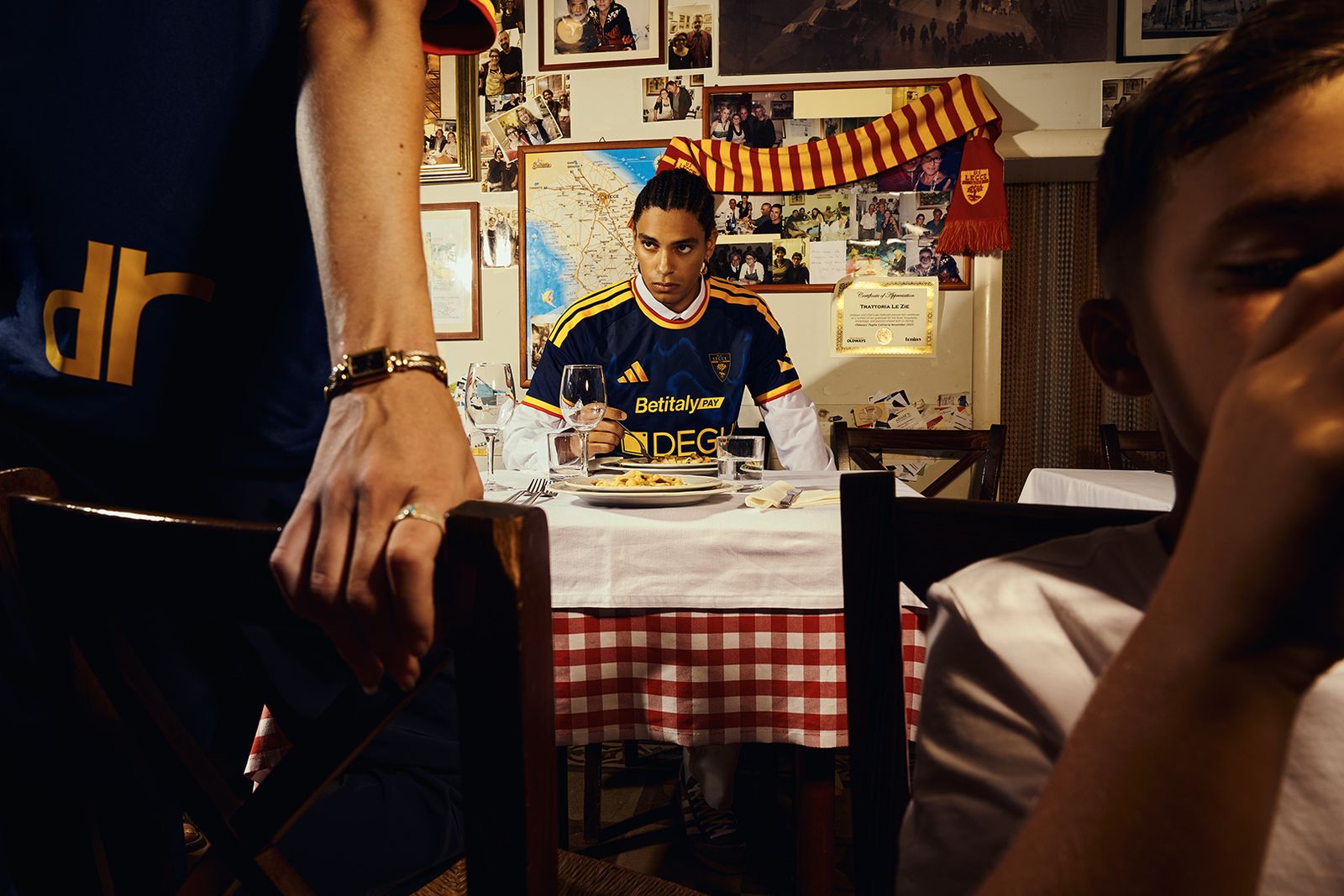
The first time I ate in Lecce, there was no menu. A woman came out of the kitchen and told us what there was: ciceri e tria, pittule, a carafe of local wine with no label on it. Outside, the baroque stone was turning the color of honey, the way it does there around eight in the evening. Nothing in that room had been designed. Nobody was performing Salento for us. The place was just itself.
We've spent the last few years working inside the commercial and brand teams of Italian football clubs, and I keep coming back to that dinner. It describes something the industry almost never pulls off: being from somewhere without feeling the need to explain it.
The thing nobody puts a price on
Italian football sits on the best raw material in world sport and does the least with it.
Think about what a club actually owns. A city of 90,000 people carrying a century of grudges and devotion. A dialect. A food culture older than the league. Light that photographers fly in for. A stadium named after a street, and a street that runs down to the sea. Nobody else can buy any of that. No amount of money builds it from scratch.
And yet most clubs treat it as decoration. It shows up in the crest, in a launch video, in a sentence about passion, and then the business plan carries on as if the club were just another content account fighting for reach. Meanwhile the money has moved. TV rights have stopped growing, and the growth is now in the direct relationship with the fan: the shop, the website, memberships, matchday. In that world a shirt isn't equipment. It's the one piece of brand a person will pay to wear in public for ten years.
The clubs figuring this out aren't chasing a good season. They're building the only advantage a rival can't buy, copy, or outspend.
Does it translate?
The question to ask about a shirt, a campaign, or a collection isn't "is it good?" It's "does it travel?" Three checks.
One. Can someone who's never been to your city tell where it's from? Not from the crest. From the thing itself.
Two. Can someone who's lived there their whole life see themselves in it? If locals feel sold to, it's decoration. If they feel described, it's identity.
Three. Does it work outside the ninety minutes? A shirt that only makes sense on a pitch has one buyer. A shirt that works over dinner in August has a market.
Almost nothing passes all three. What does tends to become the most valuable thing the club has ever made.
What happened in Lecce
Most people read the adidas deal as a change of supplier. It's a lot more than that.
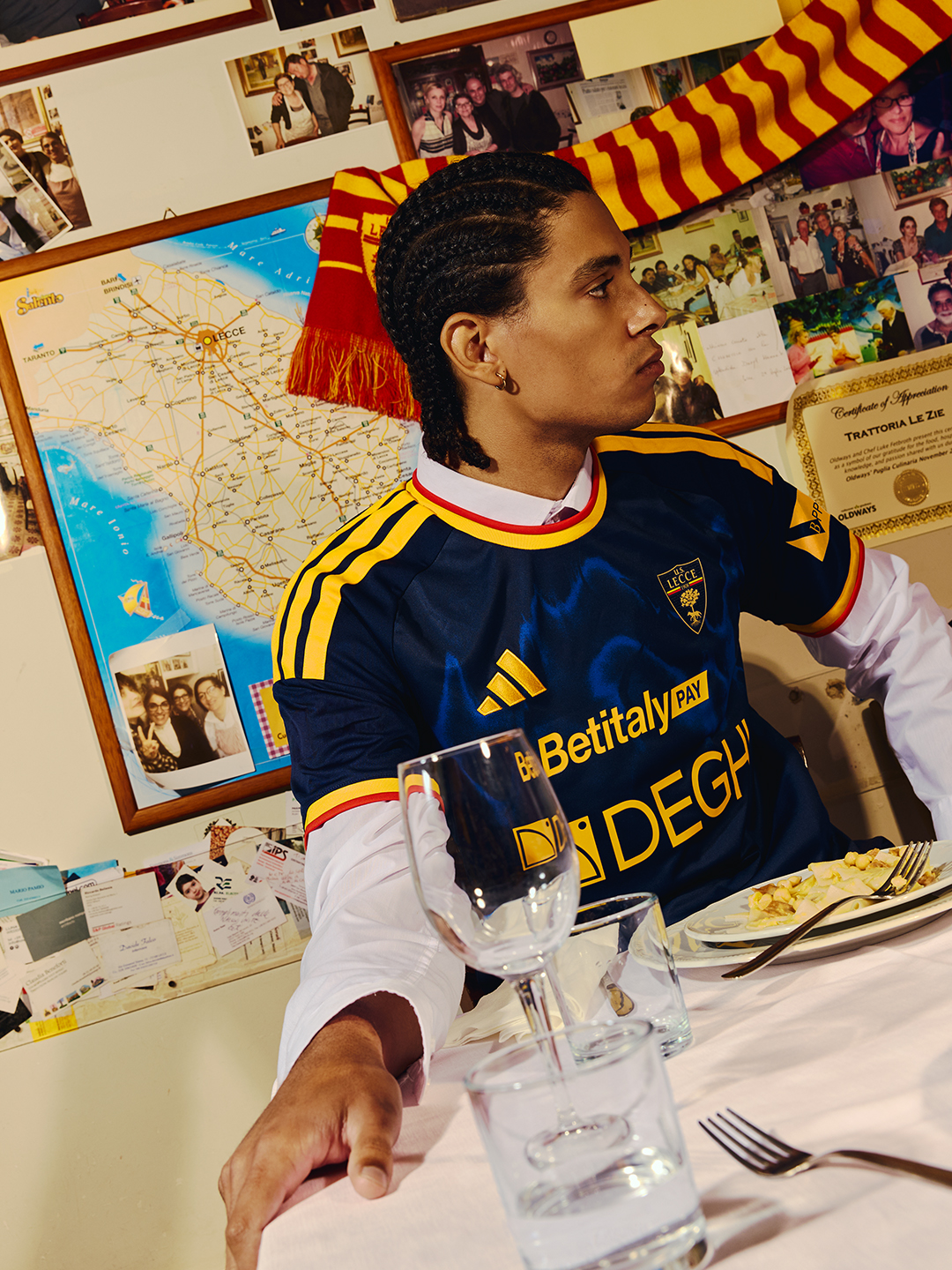
On August 10, Lecce and adidas finished the 2026-27 set with the third shirt. Navy, with a faint pattern in the fabric, red and yellow trim at the collar and cuffs, yellow stripes on the shoulders.
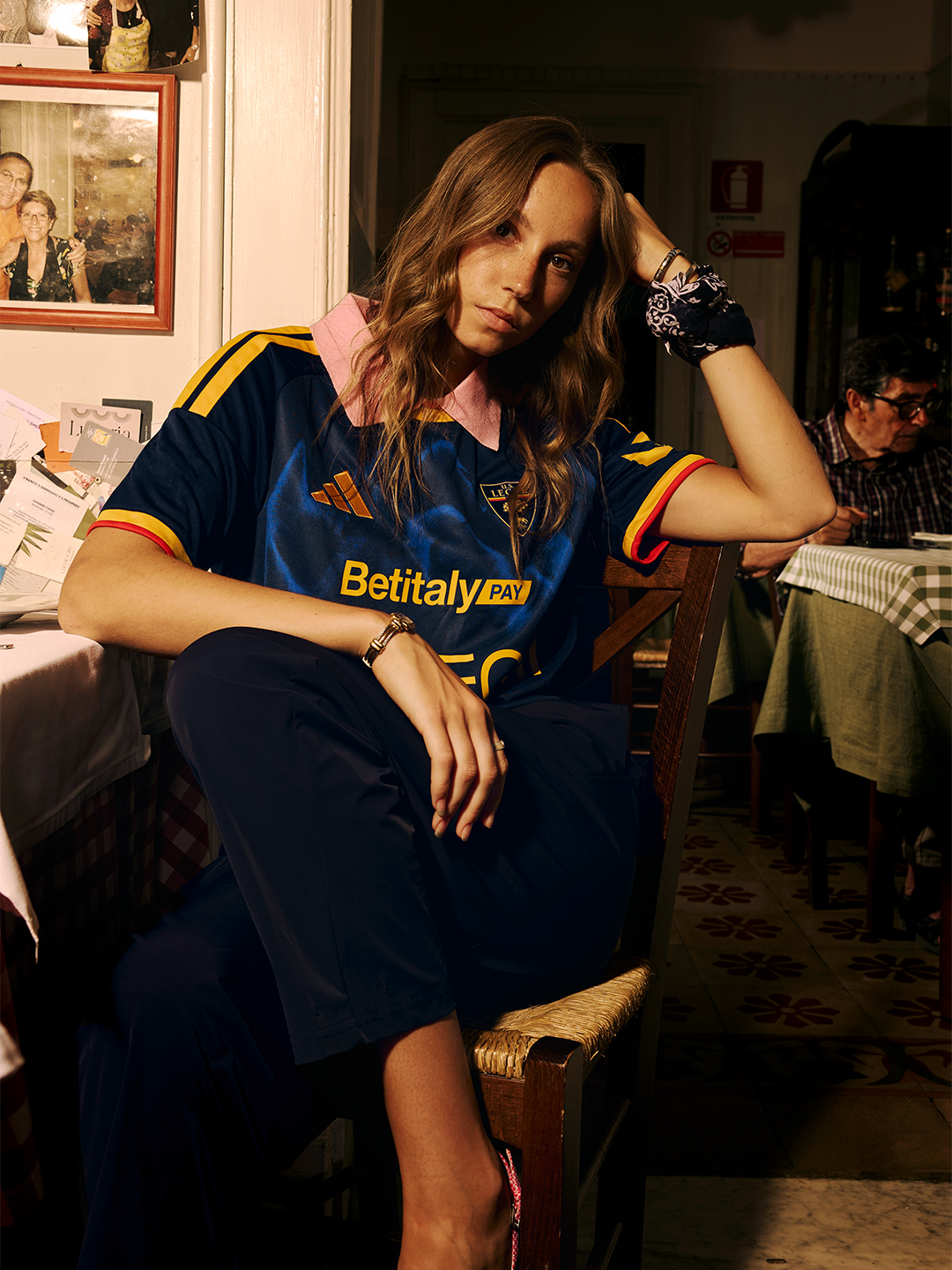
Then the interesting part. The local press didn't write about a navy shirt with a pattern. It wrote about the sea. Papers across Salento looked at the fabric, saw the water off that coast, and said so. Nobody told them to.
That's the test passing in public. The club never had to explain the reference, because anyone who's spent a week in Salento supplies it themselves. The shirt did what the trattoria did: it came from somewhere, and trusted people to recognize where.
The commercial half is bigger. This is the first adidas shirt Lecce has worn in about thirty-five years, after a run that lasted from 1983 to 1992, and it ends eight years of the club making its own kit. Read as a purchase, it's a line in a budget. Read properly, it's access: global distribution, a design language the whole world already knows, and a lifestyle operation no club this size can build alone.
The third shirt is where that access is worth the most. The home shirt belongs to history and can't be touched. The away shirt usually exists to avoid a color clash. The third one is the only shirt of the year with no job to do, which makes it the place to try something. It's where a club is allowed to be wrong, and the only place it finds out who it is.
The honest part
A pattern in the fabric is not a cultural phenomenon. It's a good first move in a system that doesn't exist yet, and the distance between those two things is where most clubs stop.
The shirt is the "easy" part, the start of the journey. What comes after it is what builds. Is there a collection or just a jersey? Is the store a shop, or somewhere people want to go? Can the website close a sale in Berlin at eleven at night? Is the launch calendar built around the fixture list, or around the four months a year when Salento is full of people who'll never see a match and would happily buy the shirt?
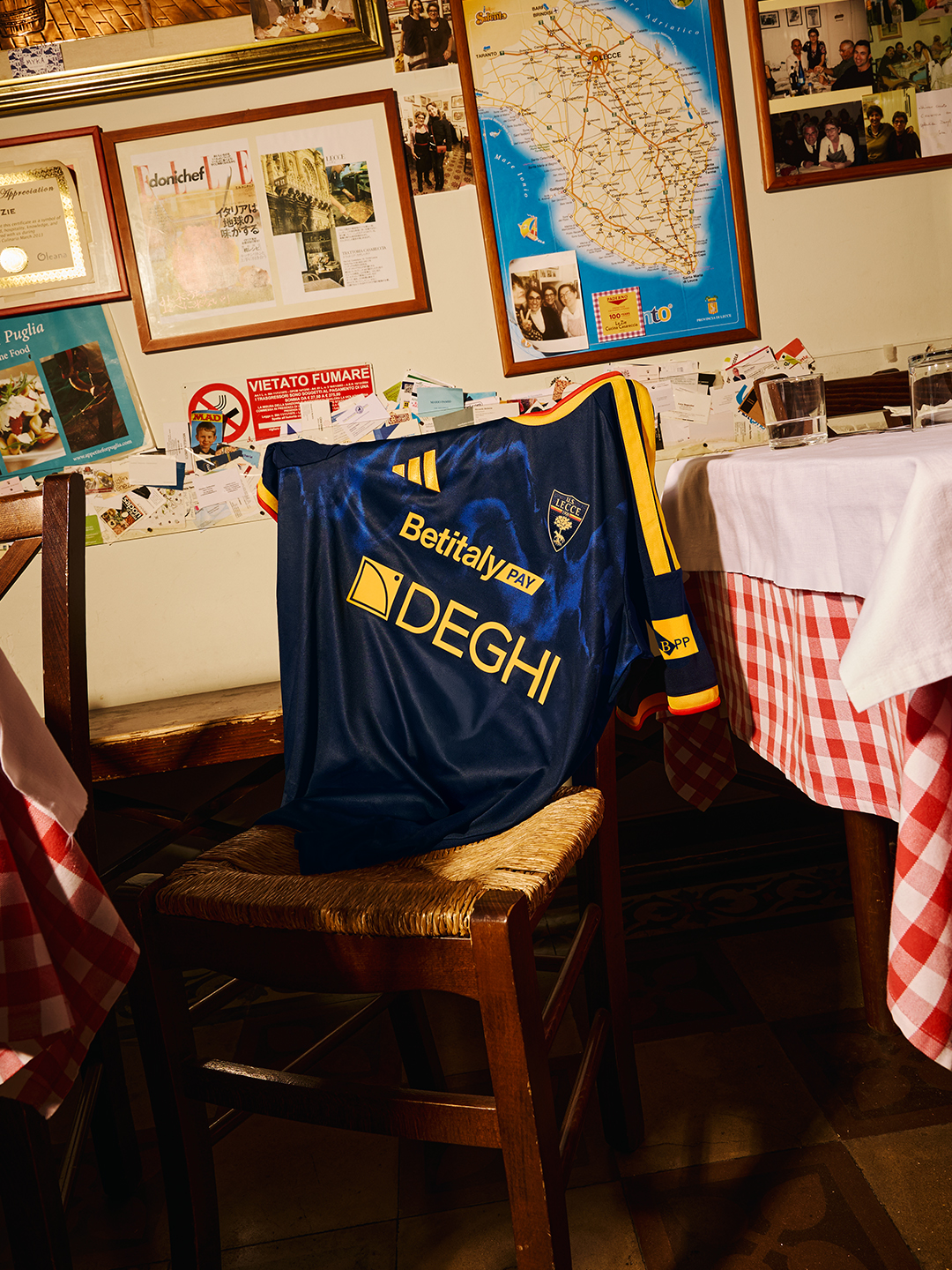
That last one is Lecce's real advantage, and almost nobody is charging for it. Salento is one of the most visited places in Italy. In August, the club's potential market is several times the size of its city. A shirt sold to a visitor in Gallipoli isn't a transaction. It's ten years of someone walking around advertising a club they've never seen play, in a market the club never had to enter. Very few clubs in Serie A hold that. Lecce holds it and has barely started.
- Brief the place, not the club. The best creative briefs in football name a city, a material, a light, a sound. They don't name values.
- Look before you invent. Find out what your fans already sing, wear, and eat. Ajax's best shirt in a decade came from supporters singing Bob Marley in a stand in Cardiff in 2008, not from a design workshop.
- Use the third shirt to experiment. One garment a year with no obligations is a gift. Spend it on an idea, not on a gradient.
- Build the shelf before the shirt. Distribution, collection, calendar, season. Then judge the launch by how many new customers it brought in, not how many units it moved. The shirt's job is to start a relationship, not close a sale.
Back to the trattoria
Nobody in that kitchen was doing brand strategy. They were cooking what they'd always cooked, with whatever the day had given them, and explaining none of it. That's the standard, and it's a high one.
A shirt is authentic when it couldn't have been made anywhere else.
Disclosure: Marte works with U.S. Lecce and other football clubs.