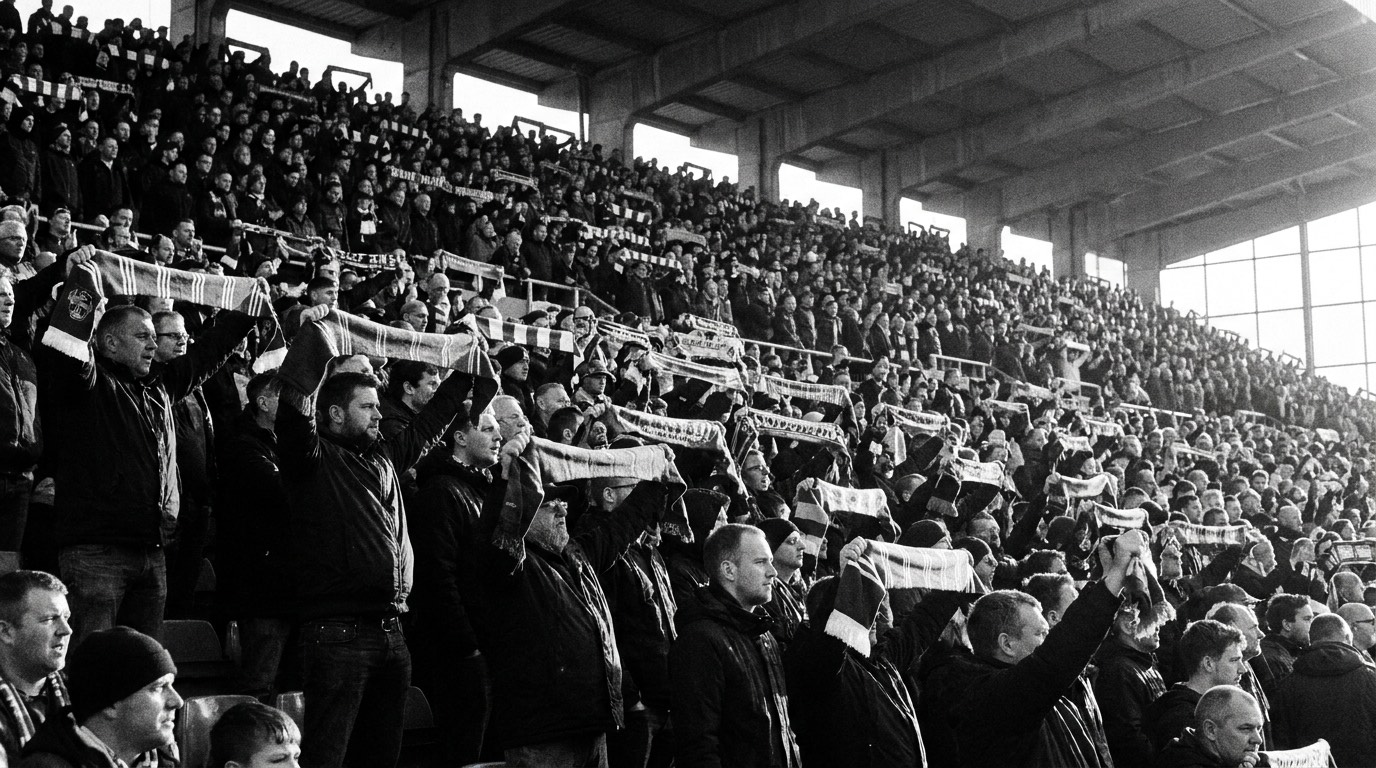
Football’s next decade will be won beyond the 90 minutes
Italian football sits on some of the most valuable city-brands in the world and monetizes almost none of them. Here is the thesis behind our work inside clubs and why we run the business rather than advise on it.
4 min read
Italy produces coaches the way it produces espresso everywhere, at every bar, with strong opinions. It produces far fewer managers for the business that surrounds the game, and that’s not a talent problem: for decades, the rational choice for every club was to invest every euro and every hour in the pitch. Compare the Premier League, the Saudi Pro League or the NBA with Serie A, B and C, and the gap is not in passion, heritage or sporting culture there, Italy wins. The gap is in the business infrastructure around the game, which has simply never been built to the same standard as the football itself.
That gap is not a failure. It’s an opportunity and it’s where we work.
The asymmetry nobody prices
Italian football holds an asset almost no other league has: cities that are global brands playing in local categories. Pisa, Lecce, Sanremo names with worldwide recognition attached to clubs with provincial revenue structures. A tower, a festival, a coastline: mindshare that most consumer brands would pay decades of media budget to acquire, sitting on the balance sheet of clubs that monetize it for 17 home matchdays a year.
Meanwhile the industry around them is changing shape. International funds are buying Italian clubs and expecting what they get elsewhere: recurring, predictable revenue in the NBA and NFL mold clubs run as entertainment companies, not as weekend rituals. The demand for that transformation has arrived. The management infrastructure to deliver it has not.
The stadium is the tell
If you want to know whether a club thinks like an entertainment company, don’t look at the trophy cabinet. Look at what the stadium does on the other 348 days.
For most Italian clubs the honest answer is: very little and rarely by choice. Aging infrastructure, municipal ownership and thin commercial teams make the stadium hard to activate beyond matchday. But the constraint has hardened into a habit of thinking: the stadium as a venue that switches on for 90 minutes a week. Our view is the opposite: the stadium is a 365-day asset events, hospitality, food & beverage, and above all data. Every interaction is profiling; every profile feeds ticketing, merchandising and sponsorship. That is what turns a club from a seller of advertising space into a media platform that sells rights and audiences and what makes it sustainable beyond TV money.
There is a dependency here that most transformation projects skip: none of this works without a data platform underneath. AI in football is not a robot in space. It’s dynamic pricing on matchday tiers, demand forecasting on capsule drops, sponsor audience packaging and all of it requires data that is collected, normalized and owned. Build the platform first, or the intelligence never arrives.
We don’t hand clubs a strategy. We sit inside and run the revenue business.
A third model between consulting and outsourcing
The football-services market offers two default contracts, and both are legitimate. The consultant brings strategy and leaves it with you; the agency takes a function and runs it for you. For many situations, either works. But for a club that needs to become a different kind of company, both share a limit: when the engagement ends, not enough has compounded inside the organization itself.
We work on a third model an external growth department. We sit inside the club with shared ownership of the transformation: building the revenue unit, restructuring the commercial and sponsorship model, rebuilding brand and merchandising, and reporting to ownership on the numbers monthly, like any internal department would. When a module needs a leader, we scout and select the person and the club hires them into its own structure. The talent stays. The system stays. We are the architects of the team, not its replacement.
Two disciplines make this work. First, sequence: we go module by module where the leverage is highest, and we deliberately leave alone what doesn’t need us yet attacking everything in parallel is how football projects dilute themselves. Second, the system before the amplification: the commercial architecture gets built in the quiet season, so that when the sporting moment arrives a promotion, a cup run, a derby the machine multiplies it instead of scrambling after it.
At Pisa Sporting Club, our first extended deployment of this model, that approach rebuilt the club’s entire revenue business across sponsorship, commerce, brand and ticketing. Yes, there was a promotion to Serie A in the middle. But the promotion was the amplifier, not the cause. The system that captured it was built the season before, in Serie B. We’ll unpack each module of that case in the coming weeks.
- Italian clubs sit on global city-brands monetized only 17 matchdays a year the biggest unpriced asset in the industry.
- Clubs are becoming entertainment companies; the stadium must work as a 365-day data and revenue asset, and that requires a data platform before any AI.
- We operate as an external growth department: inside the club, with shared ownership, hiring talent into the client’s structure a third model between consulting and outsourcing.
Why we play this game
Roughly half of our work is football, and it’s not sentiment. Football is the hardest version of the mid-market problem we solve everywhere: a strong brand, an underbuilt organization, and a market moving faster than the structure beneath it. If the model works inside a club where every result is public, every weekend is an exam, and the whole city has an opinion it works anywhere. The clubs we partner with aren’t buying advice. They’re buying an outcome, and we stay until it runs without us.