Football's Next Chapter Is Also Being Written Beyond the Pitch
In modern football, the game no longer ends at the final whistle. The clubs building a brand, a community and a home worth living in are winning long before they're promoted.
5 min read
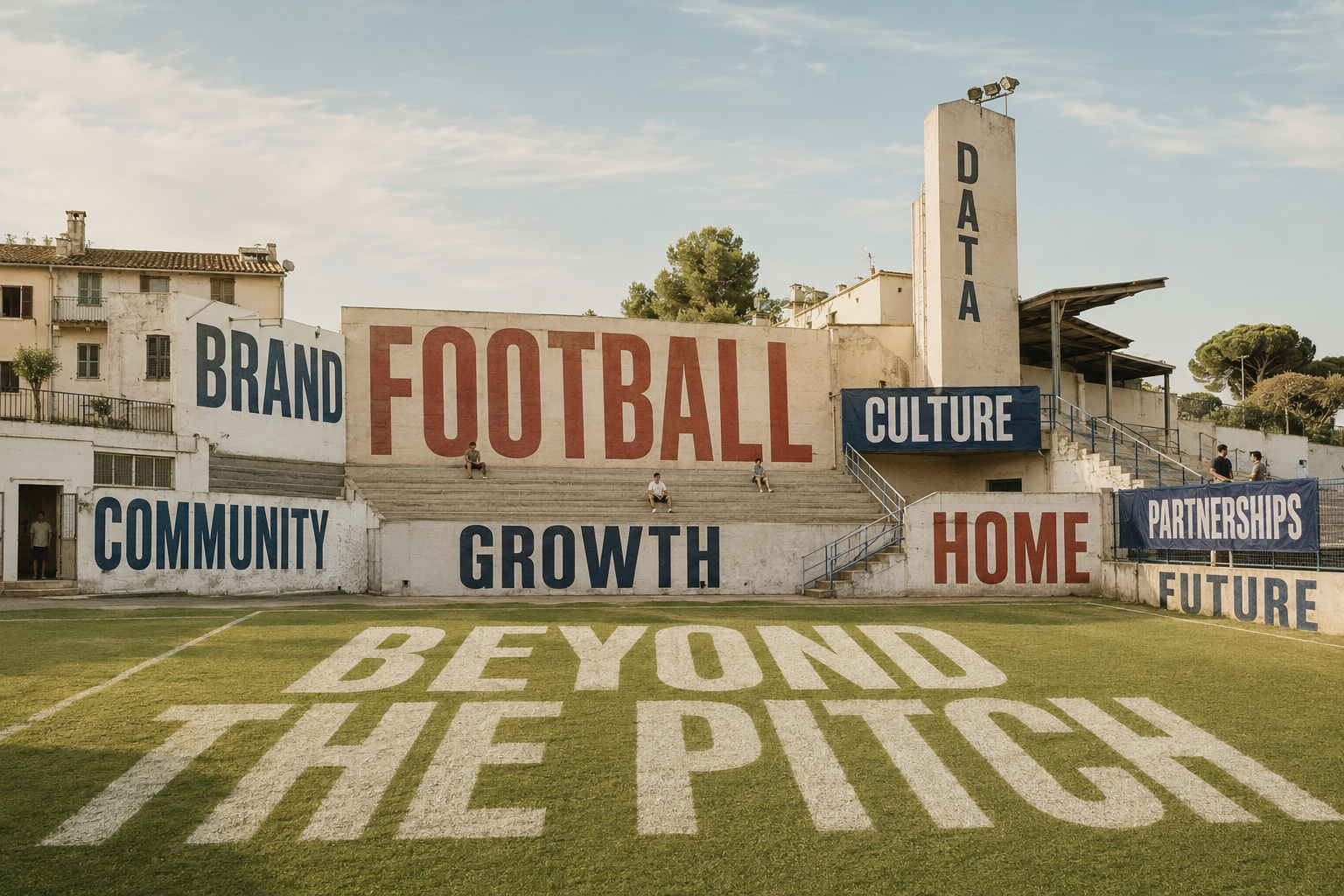
Talk to enough clubs and you hear the same answer. There's no budget for the business side. Costs on the pitch are already too high. Everyone at this level loses money anyway. So the off-pitch work, the brand, the data, the commercial side, can wait until the team goes up.
It's an understandable reflex. It's also one of the most expensive mistakes in football. A club that pours almost everything into the sporting side and treats the rest as an afterthought isn't building a healthy, sustainable project. It's chasing results it won't be able to keep. I'd rather make that point in the open than in private, one club at a time, because the whole game needs to hear it.
The reflex: treat the business as a luxury you earn later
The logic is seductive. Results earn promotion, promotion brings money, and only once the money lands does a club let itself think seriously about its brand, its data, its commercial operation, its audience abroad. Business becomes the reward for sporting success. First you go up, then you build.
It runs the other way around. The business side isn't the prize for promotion; it's the engine that pays for it. Waiting until you're promoted to build it is like waiting for the car to be fast before you switch the engine on.
Why "everyone in our division is losing money" is the argument for investing, not against
And here's what that logic misses. "Everyone at our level loses money" really means nobody at our level is building a business. That's not a reason to hold back. It's the best reason to move, because the field is wide open.
In a division where no one invests off the pitch, the first club that does builds an edge that's hard to copy. Sporting advantages are fragile: one bad season, one sold player, one injury, and the table rearranges itself. Commercial advantages compound. A stronger brand pulls better sponsors, which pay for a better squad and a better matchday, which grow the audience, which pulls better sponsors again. It's a flywheel, and whoever starts it first is hard to catch, whatever division they started in.
Clubs don't lose money because the business side doesn't pay. They lose money because they treat it as an afterthought.
What "investing off the pitch" actually means
This isn't about vanity spending, a trophy stadium or a marquee signing to buy a season of attention. Most of it costs far less than clubs assume and matters far more. It's a real brand, a story people beyond your own city want to follow. It's owning your data and your relationship with your fans instead of renting both from platforms. It's treating sponsors as partners in a growth story, not logos on a shirt. It's a content strategy that turns a local club into an audience you can reach, and sell to, anywhere.
It also means making the assets you already own work harder, and here real estate is the biggest lever of all. A stadium doesn't have to wake up seventeen times a year and sit dark the rest. Done right, it becomes a place people use beyond the ninety minutes: hospitality, retail, food, events, a museum, a space the city actually lives in, earning something every day of the week instead of a few afternoons a season. The training ground can do the same, a hub of local life rather than a cost hidden on the edge of town. Handled this way, real estate stops being an expense to survive and becomes the most durable asset a club owns: an anchor for the brand, a home for the community, and income that doesn't swing with the results.
None of this requires promotion. Most of it requires a decision.
Football is growing faster off the pitch than on it
The economics have already shifted. At the twenty richest clubs in the world, the biggest single source of income is no longer television; it's commercial. Deloitte's Football Money League puts it at 44% of revenue, growing at double digits while broadcast money sits flat. TV isn't the whole story anymore, and it isn't the part that's growing. The money moving fastest in football is commercial, and most of it is made off the pitch. And that's starting to hold true well below the elite: a club's ceiling has less to do with its division than with how good its business is.
That's the opening, and it's why "wait until we go up" is the wrong answer. By the time you're promoted, the clubs that started early are years ahead, with brands, audiences and commercial machinery no single good season can conjure.
We don't sell a service. We build partnerships and grow with the clubs we work with, and the pattern never changes: the ones that win are the ones who stopped treating the business side as a luxury and started treating it as the foundation.
Want to see where this goes? Watch the clubs building from the bottom instead of waiting for promotion to earn the right to think big. In Italy, Sanremese Calcio is one project we're following closely, and one that intrigues me, because all the right elements are there: a historic club rebuilding from Serie D, a name from the international game like Christian Karembeu now in the ownership, and a clear intent to put a healthy, strong and vibrant football culture first and let the results catch up.
Football is growing fast off the pitch. The clubs that understand this early won't just earn more. They'll be the ones going up.
So, before you decide the business side can wait, a few honest questions. Does your club really run its own data, or is it scattered across platforms you don't control? Can you follow one fan across every touchpoint, from their first shirt to last night's match, or do you lose them the moment they leave the turnstile? Are you still selling advertising like it's 1995, a board, a logo, a handshake?
If any of that stings, good. It's not a weakness, it's the gap, and the gap is where the opportunity is. No need to be embarrassed. Just write to us.